WELCOME
To the first edition of the revamped Society for Human Ecology newsletter. We are so happy to have you join us!
It has been inspiring to receive so many submissions spanning academic and creative work from all over the world. Our community continues to push the boundaries of what it means to practice human ecology, work across disciplines, develop creative solutions and ponder the philosophies of life.
We did not define a theme for the inaugural newsletter, as we wanted this edition to reflect a moment in time - where we are at as researchers, students, teachers, community members and humans. However, upon review of all submissions, the theme became overwhelmingly evident: STORYTELLING.
What purpose does storytelling serve in human ecology? One could argue that human ecology does not exist without the element of storytelling. We use stories to build bridges, break down barriers, and shape the world around us - all core elements of a human ecological approach to life.
Whether in the format of an essay, a reflection, or an academic paper, what we'd like to achieve remains the same: to understand the fulcrum of ecology, science, human dimension, and injustice. When we think through the complexities of our world and communicate our ideas through the lens of hope, we pave the way to leave things better than we found them.
On that note, please enjoy the following collection of stories.
Human Ecology Books
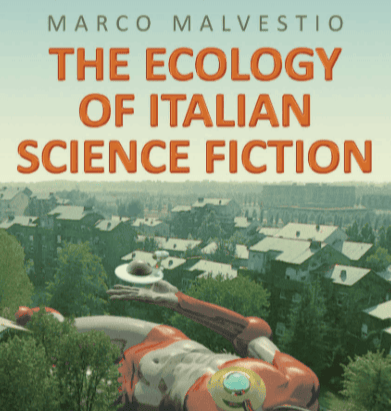
The Ecology of Italian Science Fiction
Marco Malvestio
This book examines how Italian science fiction and film from the 1950s to the present have addressed ecological issues, providing a distinctive perspective on Italy's environmental history through literary imagination. As an open access publication, this book is freely available to readers worldwide.
|
|
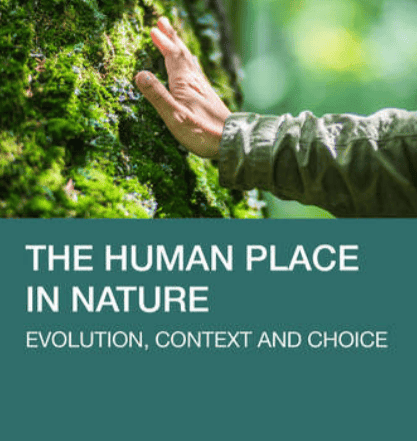
The Human Place in Nature: Evolution, Context and Choice
John Schooneveldt
A new approach to understanding the evolution of mind and consciousness by examining the perceptual abilities of animals and the way they experience their world. It offers a science-based bottom-up approach to our own conscious worldview by seeing it through the eyes of others of others.
|
SHE Spotlight - Essays from our community
Academic work & articles from our community
Rare Earths, Data Centers and the Abundance Paradox
Ana Vitoria Alkmim
Read here
|
|
Cuenca, the City of the Four Rivers
Paula Milena Cordero Cueva and Claudia Emilia Calderon Cordero
Read here
|
|
Nature, Magico-Religious Practices and Armed Conflicts
Esther Borauzima Feza
Read here
|
When Vernacular Knowledge Shapes Resistance to Gold Mining
Rose Ukeci Uwodha
Read here
|
|
Introducing the Non-Human into Access Theories
Parfait Kaningu Bushenyula
Read here
|
|
|
Rethinking UNESCO World Heritage through Multi-Sited Spaces
Lionel Bisimwa & Jeremy Lienaert
Read here
|
|
Vernacular Knowledge and Botwa Agency
Lionel Bisimwa Matabaro
Read here
|
|
|
Reflections from Human Ecology Institutions
Recap from the 2025 Ecological Society of America (ESA) Conference
"Human Ecologists were well-represented at the 2025 Ecological Society of America (ESA) Conference in Baltimore, MD, USA (Aug. 10-15), with members of the Human Ecology section of the ESA organizing multiple activities including a business meeting, social event serving the human dimensions sections, organized oral session on Socio-ecological approaches and partnerships for building climate resilient food systems (Y. Zhang, K. Rubert-Nason, R. Dyball & L. Thompson), and a special session onBuilding co-creative partnerships with ecologists to advance global sustainable development goals(K. Rubert-Nason, Y. Zhang & J. Arteaga-Torres).
The ESA Human Ecology section recently elected new leadership, with Drs. Huidong Li of Vanderbilt University and Yehui Zhong of McGill University assuming the positions of co-chairs, and Drs. Yiyi Zhang and Kennedy Rubert-Nason taking their status as past chairs. Members of the section are leading efforts to propose multiple sessions at the 2026 ESA conference in Salt Lake City, UT, USA. Dr. Rubert-Nason has also graciously agreed to serve as liaison between the ESA and the Society for Human Ecology until further notice."
Recap by Kennedy "Ned" F. Rubert-Nason, PhD
|
|
Call for researchers working on Political Ontology in Belgium
Are you working on/with Political Ontology in Belgium (EU)?
Please send an email to kimberley.vandenhole@vub.be in order to be part of this informal gathering.
|
|
|
Next Call for Content
As a reminder, this is a quarterly newsletter. The next call for content will be in January 2026, but please feel free to send feedback or submissions any time to Kira West at kira.west@humanecology.earth.
Thank you to everyone who contributed!
|
